
The country's gross domestic product (GDP) is likely to grow at 5.8 per cent in the third quarter of fiscal 2022, according to an SBI's research report- Ecowrap. The country's economy expanded by 8.4 per cent in the second quarter of 2021-22, to cross pre-pandemic levels. However, the GDP growth in July-September period was slower than the 20.1 per cent expansion in the previous quarter.

Gross enrolments of new subscribers with ESIC were 1.49 crore during the entire financial year 2018-19.

'I'm talking about that predator in your house, and how one should protect one's children from him.'

The country's gross domestic product (GDP) is likely to grow more than 9.5 per cent in fiscal 2021-22, an SBI research report-Ecowrap said. The economy grew at 8.4 per cent in the second quarter of the current fiscal, according to data released by the National Statistical Office (NSO) on Tuesday. The growth in the April-June quarter of this fiscal stood at 20.1 per cent. In October's monetary policy review, the Reserve Bank of India had retained its projection for real GDP growth at 9.5 per cent in 2021-22, consisting of 7.9 per cent in Q2; 6.8 per cent in Q3; and 6.1 per cent in Q4 of 2021-22.

Leading economists have pencilled in a high 13-15.7 per cent uptick in the economy in the first quarter of 2022-23 with an upward bias. Soumya Kanti Ghosh, the group chief economic adviser at State Bank of India, on Tuesday said he expects the GDP to clip past 15.7 per cent in the first quarter with more chances of the final numbers printing in higher, while Aditi Nayar, the chief economist at the rating agency Icra, said the economy will grow much lower at 13 per cent in the June quarter. The national statistical office will announce the first quarter GDP numbers later next week.

Unemployment rate for all ages in urban areas rose to 9.3 per cent in January-March 2021 from 9.1 per cent in the same month of the previous year, showed a periodic labour force survey by the National Statistical Office (NSO). Joblessness or unemployment rate (UR) is defined as the percentage of unemployed persons in the labour force. The UR for in CWS (current weekly status) in urban areas for persons of age 15 years and above was 10.3 per cent in October-December 2020, the ninth Periodic Labour Force Survey (PLFS) showed.

Days after the Supreme Court held as "illegal" the extension of ED Director Sanjay Kumar Mishra's tenure, the Centre on Wednesday moved the apex court seeking modification of its order to allow him to continue in office till October 15 in view of the ongoing FATF review.

The government has held back the release of complete data of the Index of Industrial Production (IIP) for April, as was done for the same month last year due to the COVID-19 lockdown. Last year in June, the National Statistical Office (NSO) had held back the release of complete IIP data due to the effect of the nationwide lockdown on factory output. This year too industrial production was hit due to lockdown restrictions imposed by states to curb the second wave of the pandemic.

The latest Office for National Statistics data takes the UK's figure past the 29,079 in Italy -- so far with the region's highest death toll from the deadly virus.
Most economists were of the view that the NSSO should release the data, as any move to withhold it will dent the image of country's statistical system.
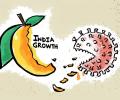
The Reserve Bank on Wednesday retained the GDP growth forecast at 9.5 per cent for the current fiscal but cautioned that the economic recovery is not yet strong enough to be self-sustaining and durable.

Retail inflation inched up to 4.48 per cent in October due to an uptick in food prices, government data showed on Friday. The Consumer Price Index (CPI) based inflation was at 4.35 per cent in September and 7.61 per cent in October 2020.

India's industrial production rose 3.1 per cent in September, according to official data released on Friday. As per the Index of Industrial Production (IIP) data by the National Statistical Office (NSO), the manufacturing sector's output surged 2.7 per cent in September 2021.
.jpg)
Declining prices of food items like vegetables pulled down retail inflation to 5.59 per cent in July, bringing it back within the RBI's comfort zone after two months, official data showed on Thursday. The retail inflation based on the Consumer Price Index (CPI) had remained above 6 per cent during May and June. The government has mandated the RBI to maintain retail inflation at 4 per cent, with a margin of 2 per cent on either side. The CPI based inflation stood at 6.26 per cent in June 2021 and 6.73 per cent in July 2020.

Reserve Bank of India Deputy Governor Viral Acharya is the eighth economist to quit since the Modi government took office.

Recalibrating data of past years using 2011-12 as the base year instead of 2004-05, the Central Statistics Office estimated that India's GDP grew by 8.5% in the financial year 2010-11 and not at 10.3% as previously estimated.

During the month, inflation in vegetables shot up to 35.99 per cent, as against 26.10 per cent in October. Likewise, the prices of cereals and eggs grew at a faster pace of 3.71 per cent.
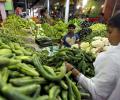
Andhra Pradesh posted 8.14% consumer inflation in October.
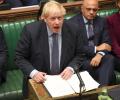
British Prime Minister Boris Johnson on Wednesday announced his government's decision to lift all the additional restrictions imposed to contain the spread of Omicron, including the mandatory wearing of face masks anywhere, from next Thursday after analysis showed that the new variant of Covid-19 has now most likely peaked in the country.

'80% of the rural and urban population don't have enough purchasing power.'
Subdued prices of food items like vegetables pulled down retail inflation for the third month in a row to 5.3 per cent in August, within the RBI's comfort zone. While the Consumer Price Index (CPI)-based retail inflation declined to 5.3 per cent in August from 6.69 per cent in the same month a year ago, food inflation dipped at a much faster pace to 3.11 per cent from 9.05 per cent in August 2020. The food inflation was also lower than 3.96 per cent in preceding month of July.

China's population in 2022 -- 1.4118 billion -- fell by 850,000 from 2021, the National Bureau of Statistics (NBS) said.

Despite admitting to price pressures both from food items and input prices, RBI Governor Shaktikanta Das on Wednesday hoped that a normal Southwest monsoon will have a "soothing impact" on inflation pressures and ruled out any wide variations in medium-term inflation forecast from what was given in April. In an unscheduled address earlier in the day amidst the raging pandemic, Das said the overall outlook for the economy is highly uncertain and is clouded with downside risks. He offered a slew of relief and liquidity measures to individuals and small businesses apart from a Rs 50,000 crore special liquidity window to the healthcare sector.
Niti Aayog vice-chairman Rajiv Kumar debunked claims of jobless growth, saying how can a country grow at an average of 7 per cent without employment.

She also took a swipe at the Bharatiya Janata Party over its defeat in the just-concluded Himachal Pradesh assembly elections, saying the ruling party's president could not hold on to his home state. "Who is the Pappu now?" she asked.

The Indian economy can contract by 7.7 per cent in current financial year ending on March 31 and the growth could be 11 per cent in the next financial year, according to the Economic Survey tabled in Parliament by Finance Minister Nirmala Sitharaman. The contraction in FY21 is mainly due to coronavirus (Covid-19) pandemic and the visible damage caused by the subsequent countrywide lockdown to contain it. The survey unveiled two days before the Union Budget is broadly in line with forecasts by the Reserve Bank of India (RBI) which has said it expected the country's GDP to contract by 7.5 per cent in the year ending March 31.

The common man in India is bogged down by corruption and there is a need to fix accountability at all levels, the Supreme Court observed on Friday as it dealt with a petition seeking debarment of those against whom charges have been framed in criminal cases from contesting elections.

The announcement means no fans will be allowed from Saturday at the horse racing in Goodwood as well as the Crucible Theatre for the World Snooker Championships.

"The Right to Life as guaranteed by Article 21...gives the right to every human being to live a life of dignity with access to at-least bare necessities of life. To provide food security to impoverished persons is the bounden duty of all States and Governments," the top court observed while issuing a slew of directions on a plea of three activists.

Experts said a dip in consumption expenditure indicated an increasing prevalence of poverty in the country.

It's meant to be a corporate rah-rah to encourage office bonding and bonhomie. But is it really, asks Kishore Singh.

India's industrial production growth remained subdued for the second straight month and expanded by 3.2 per cent in October, mainly due to the waning low base effect while mining, power and manufacturing sectors performed well. The manufacturing sector, which constitutes 77.63 per cent of the Index of Industrial Production (IIP), grew two per cent in October, according to data released by the National Statistical Office (NSO) on Friday. The mining sector output rose 11.4 per cent in October, while power generation increased 3.1 per cent.

Congress President Sonia Gandhi has not sought any reimbursement for medical bills from the government, the Central Information Commission has said.

The report on 'Household Social Consumption: Education in India as part of 75th round of National Sample Survey -- from July 2017 to June 2018' provides for state-wise detail of literacy rate among the persons aged seven years and above.

Constituencies that are going to the polls in the first phase, slated for April 19, have just 19 days for campaigning. Contrast that with those going to polls in the 7th phase, notes N Sathiya Moorthy.

Retail inflation hit an eight-month high of 6.07 per cent in February, remaining above the RBI's comfort level for the second month in a row, while wholesale price-based inflation soared to 13.11 per cent on account of hardening of crude oil and non-food item prices, government data showed on Monday. The previous high for retail inflation was 6.26 per cent in June 2021. The consumer price index (CPI) based retail inflation, which is taken into account by the Reserve Bank of India (RBI) while deciding its monetary policy, rose mainly because of costlier food items, as per the data released by the National Statistical Office (NSO).

A careful reading of the national income accounts suggests that after a strong recovery from the pandemic, there has been a significant ebbing of dynamism over the last three quarters to more modest levels recently, note Arvind Subramanian and Josh Felman.

The sudden stop in economic activity led to a sharp decline in employment-intensive sectors like construction, manufacturing and trade, hotels, transport etc.

With decline in number of fresh COVID-19 cases and easing of restrictions, the country's gross domestic product (GDP) will grow at 8.5 per cent in FY2021-22, according to credit rating agency Icra Ratings. It expects the gross value added (GVA) at basic prices (at constant 2011-12 prices) to grow at 7.3 per cent in FY2022. "The impact of the second wave of COVID-19 and the ensuing state-wise restrictions was seen across a variety of high frequency indicators in April-May 2021.

With no rate cuts on the table, the other monetary policy alternative could be to reduce the width of the asymmetric policy corridor or increase in reverse repo rate when the pandemic subsides, they opined.
